Times Have Change the Civil Liberties Debate

Shorter Glenn Greenwald: The civil liberties debate in America isn’t what it used to be.

Back then, the premise that unchecked presidential spying would lead to massive abuses — as it did for decades — was just a given, something beyond the realm of what could be reasonably debated. Now, only far Left partisans worry about such silly things.

Back then — with a relentless, ideologically extreme Evil Empire threatening our very existence and our freedoms — GOP fear-mongering was brushed aside. The political establishment overwhelmingly concluded that warrantless eavesdropping presented intolerable dangers, and many believed that FISA’s “safeguards” were actually woefully inadequate. Telecoms lobbied on behalf of their customers’ privacy rights and against being drawn into government surveillance. Editorial boards were almost unanimously on the side of greater oversight on presidential spying.

That all seems so quaint. The mindset which back then defined the radical, pro-surveillance right-wing fringe has now become the sweet spot of our political establishment. The GOP fear-mongering that back then was laughed away today dominates our discourse and shapes our laws. The secret FISA court which back then was viewed even by some conservatives as an extreme threat to civil liberties is now the outermost liberal viewpoint, one that is about to be ejected altogether by the Democratic Congress from the mainstream spectrum. The political establishment today knows only one viewpoint: literally no limits are tolerable on the power of the loving, protective Surveillance State.

Greenwald points out that the FISC, as a secret court which only government officials have access to, has long been thought to be a threat to civil liberties. Now, returning to a time where FISA regulates all electronic surveillance and we rely on the FISC to grant warrants for the surveillance represents a very “liberal” stance on civil liberties.

It truly is remarkable to consider how far the Bush administration has brought this country from a time where the civil liberties of citizenry were respected and protected.
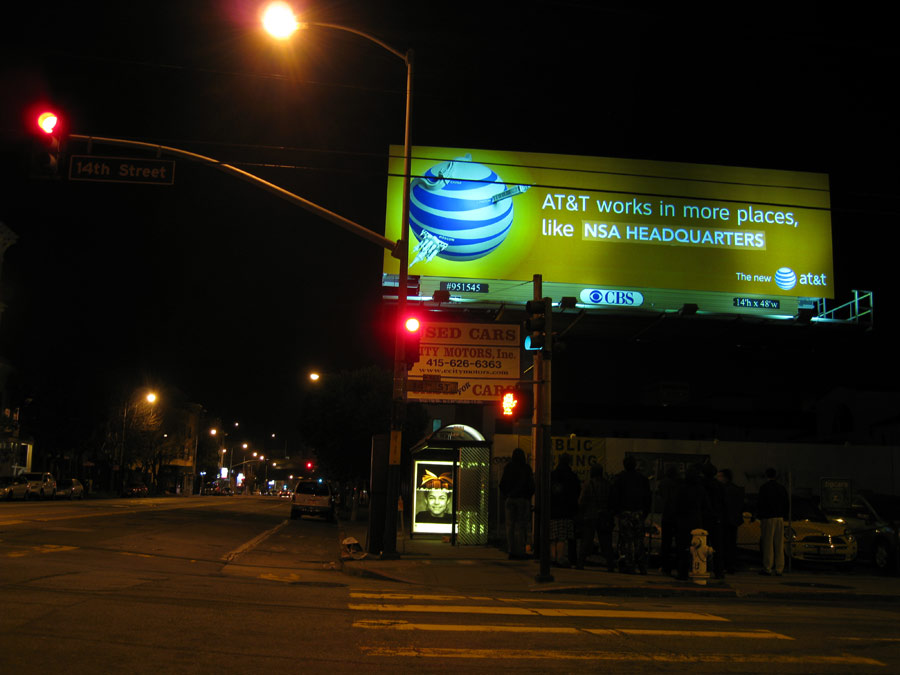
Plaintiffs: “Protect the Rights of American Citizens”

The plaintiffs of one of the lawsuits against the telecom companies have written an op-ed in the Chicago Tribune about why they sued AT&T. Their suit would be killed by legislation that includes retroactive immunity. There’s been a lot of questioning from the right about the motives of the plaintiffs and the lawyers to sue the telecoms and subsequently desire the suits to move forward like all other lawsuits in the history of American jurisprudence. The op-ed answers these questions

The Bush administration and its supporters in Congress complain that these lawsuits are simply about money and enriching trial lawyers — suggesting that the litigation should be stopped because of the potential damages that might be awarded in such lawsuits. This criticism ignores the fact that, according to the rules in the federal court, the only way that we could ensure that a federal judge could continue to explore previous violations if the companies simply changed their participation or the government changed or ended the program was to ask for minimal damages. We are not interested in recovering money for ourselves, nor is our counsel, the American Civil Liberties Union of Illinois. We, however, are committed to assuring that these giant companies are punished for violating the law and thus dissuaded from violating the law in the future.

More important, amnesty not only lets the companies off the hook without answering any questions, it assures that the American people will never learn about the breadth and extent of the lawless program. Some seem to suggest that we should not have our day in court because a select few members of Congress have been able to review documents about the spy program operated by the White House. The judgment of a few Washington insiders is not a substitute for the careful scrutiny of a federal court.

Congress is supposed to act to protect the rights of American citizens, not sacrifice those rights to large corporate entities. The House and Senate should resist the bullying tactics of the Bush White House and ensure that we have our day in court to vindicate our rights and reveal any illegality engaged in by the telecoms. We need to know about the Bush White House’s secret program. [Emphasis added]

There is a wide gap between self-interest and the rule of law. The plaintiffs in this case, at least, are seeking the same treatment under the law as any others. This is not a radical idea, but rather one of the most fundamental principles of American society. Granting retroactive immunity to the telecom companies that helped the Bush administration spy on Americans without warrant would seriously undermine the rule of law. It would show that you are only subject to the law as long as you don’t have powerful allies in Congress.

The plaintiffs are right – Congress must not grant retroactive immunity to the telecoms.

Immunity, Not Security, At Stake in FISA Debate

In today’s New York Times, Eric Lichblau has an article going about how the current telecom debate is not focused on any security related matters, but instead hinges on granting retroactive immunity to telecoms that helped the Bush administration spy on Americans.

The warnings from President Bush and his senior aides have grown more urgent over the last few weeks, now that Congress has let a temporary wiretapping law expire. But there is little sign of anxiety among many intelligence and phone industry officials.

At the Pentagon and the military’s Central Command, senior officials gave no indication of any heightened concern about the lapsing of the law. In Congress, staff members with access to updated briefings said they had not been given any specific information about lost intelligence that might endanger national security. And in the telecommunications industry, executives said it was largely business as usual.

Indeed, for all the heated rhetoric in Washington about the government’s wiretapping powers, the debate over what a new surveillance law should look like has little to do with the present or the future and almost everything to do with the past.

At its crux, the debate is about whether Mr. Bush can give retroactive legal protection to telephone carriers that cooperated in the program of wiretapping without warrants he authorized weeks after the Sept. 11, 2001, attacks, a program that critics charge was illegal. [Emphasis added]

As long as intelligence professionals are not telling Congress that our ability to conduct electronic surveillance is not being impaired, I don’t see how the Bush administration will be able to pressure Congress into caving on immunity legislation. When the debate is solely hung up on immunity, it’s not likely to get Democrats to feel the need to pass legislation appeasing Bush and move on. Yesterday Republicans again refused to pass an extension of the Protect America AT&T Act, so the onus for new legislation is clearly not urgent, as the only additive to the law would be retroactive immunity. All other surveillance can continue for up to a year and new surveillance can begin up to 72 hours before a court order is required.

This system – FISA – has worked since 1978 with no known problems. It will continue to work tomorrow and the next day.

Lichtblau’s article makes the story in Congress Daily look more like a trial balloon. If the security apparatus isn’t driving a call for new legislation, I don’t see the Democrats in the House – who have been very strong in their opposition to the SSCI bill and retroactive immunity – caving to allow votes on bad legislation. Time will tell, but for now it’s important that Democrats in Congress listen to what the intelligence community is not saying to them about the state of our surveillance operations. All is well following the sunset of the Protect America AT&T Act and things continue to work under FISA. The need is for Congress to work on legislation that upholds the Constitution, ensures oversight of surveillance operations, and does not grant retroactive immunity to the big telecoms that helped the Bush administration illegally spy on Americans.

Dems Must Use the Upper Hand on FISA

McJoan at Daily Kos:

Now it’s not at all clear that this is legislative effort is actually happening or whether it’s a trial balloon or if it’s real. But whatever it is, it would be phenomenally stupid to try to enact. First, the House has already voted on the Senate bill, the Protect AT&T Act, and rejected it. When that happens, you go to conference. When the Republicans refuse to cooperate in conference, you do it without them or table action on the bill.

For once, real Democrats in the House have the upper hand. They don’t need to do anything on FISA. They certainly don’t need to cave the administration to Protect AT&T.

Re-reading the Congress Daily PM article, it does look like this could be a trial balloon. In that case, here’s the response to the trial: it’s a bad idea and Dems should not follow the tact of splitting the Senate bill in two. The House should not consider any solution a solution if it is based solely on the Senate-passed bill. That bill is a failure and, as McJoan notes, the Dems have the muscle to put something much better forward.

Blogged with Flock

Potential Deal Could Assure Retroactive Immunity

This is from last night’s Congress Daily PM dispatch by Chris Strohm and Christian Bourge:

To break an impasse over legislation overhauling the Foreign Intelligence Surveillance Act, House Democratic leaders are considering the option of taking up a Senate-passed FISA bill in stages, congressional sources said today. Under the plan, the House would vote separately on the first title of the bill, which authorizes surveillance activities, and then on the bill’s second title, which grants retroactive legal immunity to telecommunications companies that aided the Bush administration’s warrantless electronic surveillance activities. The two would be recombined, assuming passage of both titles. In this way, Democratic leaders believe they can give an out to lawmakers opposed to the retroactive immunity provision. Republican leadership sources said their caucus would back such a plan because not only would it give Democratic leaders the out they need, it would provide a political win for the GOP. It remains to be seen if such a move will placate liberal Democrats who adamantly oppose giving in to the Bush administration on the immunity issue.

House Speaker Pelosi said that Democrats hope to have a solution worked out by March 8. But she also indicated that Democrats want language included in the bill that would clarify that FISA is the exclusive means under which the government can conduct electronic surveillance. The White House and some congressional Republicans have argued that the 2001 authorization of military force to launch the war on terrorism gave Bush the authority to conduct warrantless electronic surveillance. They also say the president has inherent constitutional authority to do what is necessary to protect the country. Senators have battled over whether to include so-called exclusivity language in their FISA bill. In the end, an amendment from Sen. Dianne Feinstein, D-Calif., that states FISA is the exclusive means for conducting electronic surveillance failed to win a needed 60 votes in a roll call that split mainly along party lines.

This is not a good sign. If Title I and Title II of the Senate-passed Intelligence Committee bill are voted on separately in the House, the Blue Dogs have the ability to vote with the Republicans and pass the Senate bill in two parts. Title II, of course, is where retroactive immunity for big telecoms resides. And I’ll repeat – this style of voting on the Senate bill would make it more likely the retroactive immunity would pass through Blue Dog Democrats voting with the Republican caucus in the House.

I don’t know why the House leadership, who has been steadfast against the bad Senate bill, would suddenly let the Senate bill the one that is voted on to move forward. It makes no sense. The overwhelming majority of House Democrats don’t want a bill that includes retroactive immunity and bad wiretapping oversight. But the Senate bill that would be receiving votes under this deal would be just that. Clearly in the closed-door negotiations with pro-Constitution Democrats, Jay Rockefeller has refused to budge.

It’s also interesting that, in the end, the main sticking point in Title I is the Senate bill’s failure to include exclusivity. This fight remains one area where the Bush administration is most clearly seeking congressional approval for their radical theories of executive power. It would be an epic failure if the House passed legislation that did just that. FISA says it is the exclusive means for conducting electronic surveillance on Americans. That law did not change when George W. Bush took office and it did not change on September 11, 2001. Exclusivity is one of the key reasons that Bush’s warrantless wiretapping program was and is illegal. We cannot let the law be changed to legitimize Bush’s theories of a unitary executive.

While it’s still possible, we need to let the House hear from us to say we don’t want retroactive immunity. Not in the Senate passed bill. Not in any other. Use the contact tool from CREDO Action to tell your rep to oppose retroactive immunity, no matter how it’s presented to them.

Republicans Crying Over Telecom Money

Shorter Republicans in Congress: Don’t the Big Telecoms know how badly they need us to help them? Don’t they know that we’ll never ask them to follow the law? What gives?

Roll Call reports that Republicans on the Hill are up in arms over the fact that the telecom industry isn’t giving more money to GOP campaign coffers.

With the House Democrats’ refusal to grant retroactive immunity to phone companies — stalling the rewrite of the warrantless wiretapping program — GOP leadership aides are grumbling that their party isn’t getting more political money from the telecommunications industry.

Like most corporate interests with a heavy stake in Congressional action, the major phone companies significantly boosted their contributions to Democrats last year after the party surged back into the majority.

But giving by that sector is getting special attention from Republicans now that the debate over the surveillance program is front and center — and focused on the phone companies’ role in aiding the Bush administration after the 9/11 terrorist attacks.

“It’s quite discouraging,” said one GOP leadership aide, referring to the disparity in giving from the telecommunications industry in light of the FISA debate, but also the broader lack of support for Republicans from the business community in general.

“These companies just won’t do anything,” the aide said. “Even when you have the Democrats working against their bottom line.”

It’s pretty pathetic actually. The Republicans are going out of their way to champion an issue that, while the telecoms are happy to benefit from, they’re not demanding in exchange for continued partnership with the US government. The GOP is begging the telecoms to give them the money they need for “air cover” – to continue running attack ads on Democrats in support of the Republican Party’s efforts to destroy the Constitution. Don’t the telecoms get how unpopular what the GOP is doing, don’t they know how badly the Republicans need to Madison Avenue up this issue so people will really get why the Republicans are right?

The National Republican Congressional Committee was $29 million short of its Democratic counterpart in cash on hand as of Jan. 31.

Republicans really are flipping the couch cushions to find revenue streams. They are used to the world of quid pro quo, they just made the mistake of thinking that because they brought fire and brimstone to the FISA fight, that  it was going to result with heaps and heaps of donations from Big Telecom. I don’t know why the telecoms aren’t showing the Republicans the reward they think they deserve, but I find it hilarious to watch them have vapors over it.

Democracies, Now With Less Democrats

The good news, according to TPM Muckraker, is that Foundation for the Defense of Democracies – which is running the odious wiretapping ad against freshman Democratic incumbents – has been abandoned by all Democratic members of its Board of Advisors. Not surprisingly, the exception to the rule, as always, is Joe Lieberman:

Our call and email to Sen. Lieberman’s spokesman were unreturned.

Someone please remind me when the schedule for the Republican National Convention speeches is announced.

Obama on the Constitution, Dodd

Yes, please:

We know it’s time to time to restore our Constitution and the rule of law. This is an issue that was at the heart of Senator Dodd’s candidacy, and I share his passion for restoring the balance between the security we demand and the civil liberties that we cherish.

The American people must be able to trust that their president values principle over politics, and justice over unchecked power. I’ve been proud to stand with Senator Dodd in his fight against retroactive immunity for the telecommunications industry. Secrecy and special interests must not trump accountability. We must show our citizens – and set an example to the world – that laws cannot be ignored when it is inconvenient. Because in America – no one is above the law.

It’s time to reject torture without equivocation. It’s time to close Guantanamo and to restore habeas corpus. It’s time to give our intelligence and law enforcement agencies the tools they need to track down and take out terrorists, while ensuring that their actions are subject to vigorous oversight that protects our freedom. So let me be perfectly clear: I have taught the Constitution, I understand the Constitution, and I will obey the Constitution when I am President of the United States.

Finally, it’s time to once again inspire this nation to rally behind a common purpose – a higher purpose. Throughout his campaign, Senator Dodd spoke eloquently about the need to turn the page to a new era of public service. That is the legacy of his own family – the legacy of a father who stood up to the Nazis at Nuremberg, and a young man who enlisted in the Peace Corps after he heard President Kennedy’s call to service on a cold Inauguration Day.

Hat tip to Dean Barker for highlighting this passage. I’d read the full speech earlier today but had only linked to it. This passage was definitely worthy of more attention, though.